
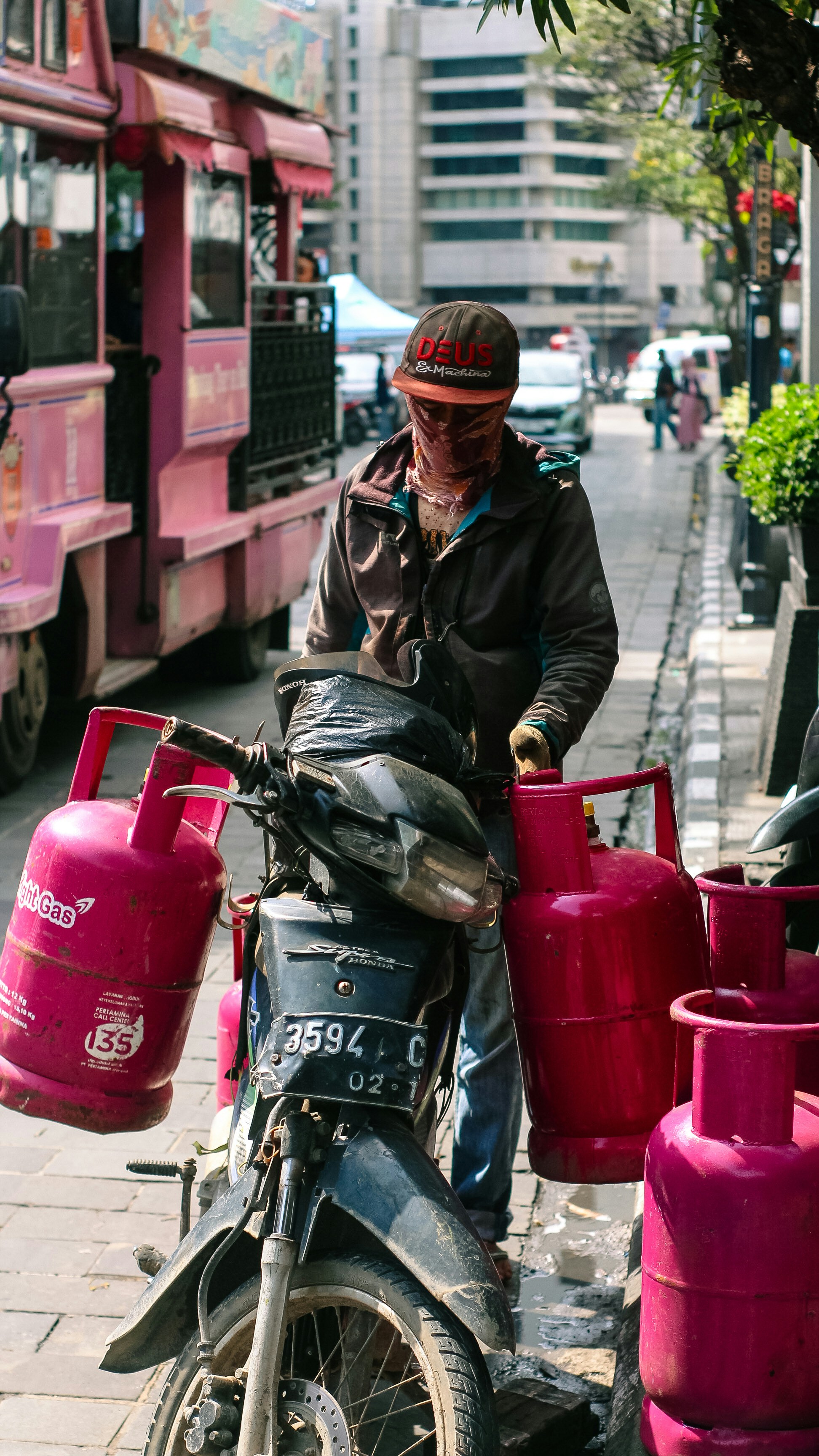
Adding home delivery is one of the fastest ways to grow an LPG business - customers who won't switch suppliers for a better price will happily switch for the convenience of a cylinder showing up at their door. But delivery introduces a problem retail counters never had: the moment a driver rides off with cylinders and starts collecting cash, your visibility drops to zero until he walks back through the door.
Why Delivery Changes the Accountability Equation
At a counter, a sale and a stock deduction happen in the same place, at the same moment, in front of you. On a delivery route, there's a gap of hours - sometimes a full day - between a cylinder leaving your branch and the sale actually being confirmed. That gap is where discrepancies live: a cylinder given as a favor to a regular customer without logging it, cash collected but handed over late (or not at all), or a delivery marked complete that never actually happened.
The Three Things You Lose Sight of the Moment a Driver Leaves
- Exactly how many cylinders (and which sizes) are physically on the bike or rickshaw right now
- How much cash has been collected but not yet handed over to the branch
- Which orders have actually been delivered versus which are still pending, delayed, or quietly skipped
Building a Dispatch Process That Doesn't Depend on Memory
The fix isn't stricter supervision - it's removing the need to remember anything in the first place. Every step of a delivery should generate its own record automatically, not rely on someone writing it down later.
- Assign each order to a specific driver before he leaves the branch, with the cylinders and quantities logged against his name.
- The driver marks each delivery complete in the app the moment it happens - not at the end of his shift from memory.
- The customer confirms via a WhatsApp receipt or a quick digital signature, so there's a second party's record, not just the driver's word.
- Cash collected is reconciled against the system's expected total at the end of every shift, not at the end of every week.
Tracking Driver-Held Stock as Its Own Category
Cylinders on a delivery route aren't 'in stock' and they aren't 'sold' - they're a distinct third state that most paper systems don't have a place for. A proper system tracks stock 'with driver' separately from branch stock, so at any moment you know exactly how many cylinders are on the road, with which driver, and for how long. When a driver's shift ends, the system expects those cylinders back as either delivered (sold) or returned (back in branch stock) - there's no in-between state where a cylinder just quietly disappears from the count.
Practical rule
Require every driver to reconcile his bike or rickshaw's cylinder count against the app before he's allowed to load up for the next round. It takes two minutes and catches problems the same day instead of at month-end.
Handling the 'I Already Paid the Driver' Dispute
This is the single most common delivery-related argument in LPG retail, and it's almost always a timing problem, not a fraud problem - the driver collected the cash but the branch hadn't recorded it yet when the customer called to check. A digital delivery confirmation with a timestamp, visible to both the customer and the branch the moment it happens, ends this argument before it starts. Everyone is looking at the same record instead of two different memories of the same event.
What to Measure Every Week
- Deliveries completed per driver, per day
- Average time from order placed to delivery confirmed
- Cash reconciliation variance per driver, per shift
- Cylinders returned undelivered, and why
None of these numbers matter in isolation - what matters is watching them over a few weeks. A driver whose cash variance keeps creeping up, or whose delivery times are consistently longer than everyone else's, is telling you something worth a conversation long before it becomes a real loss.